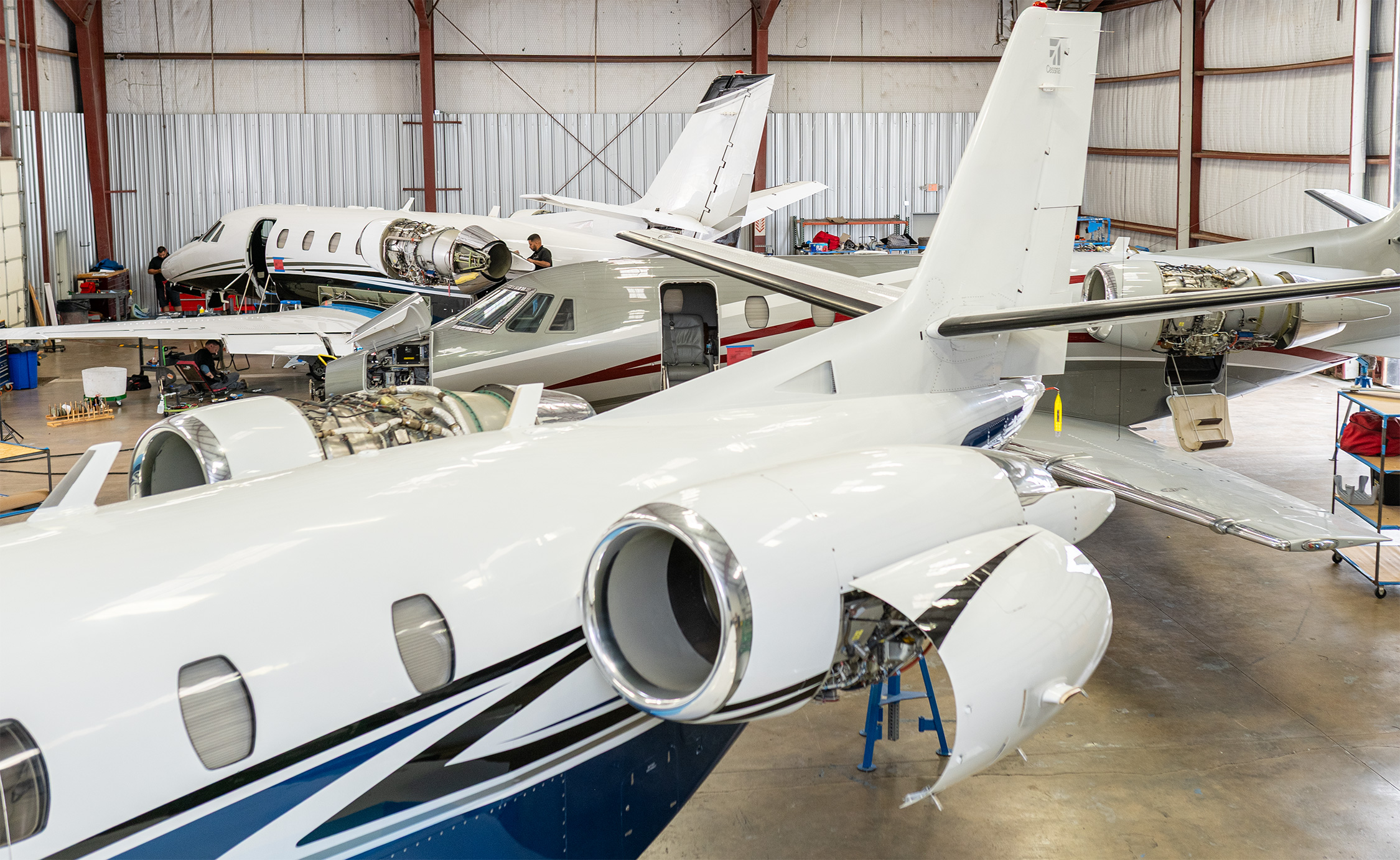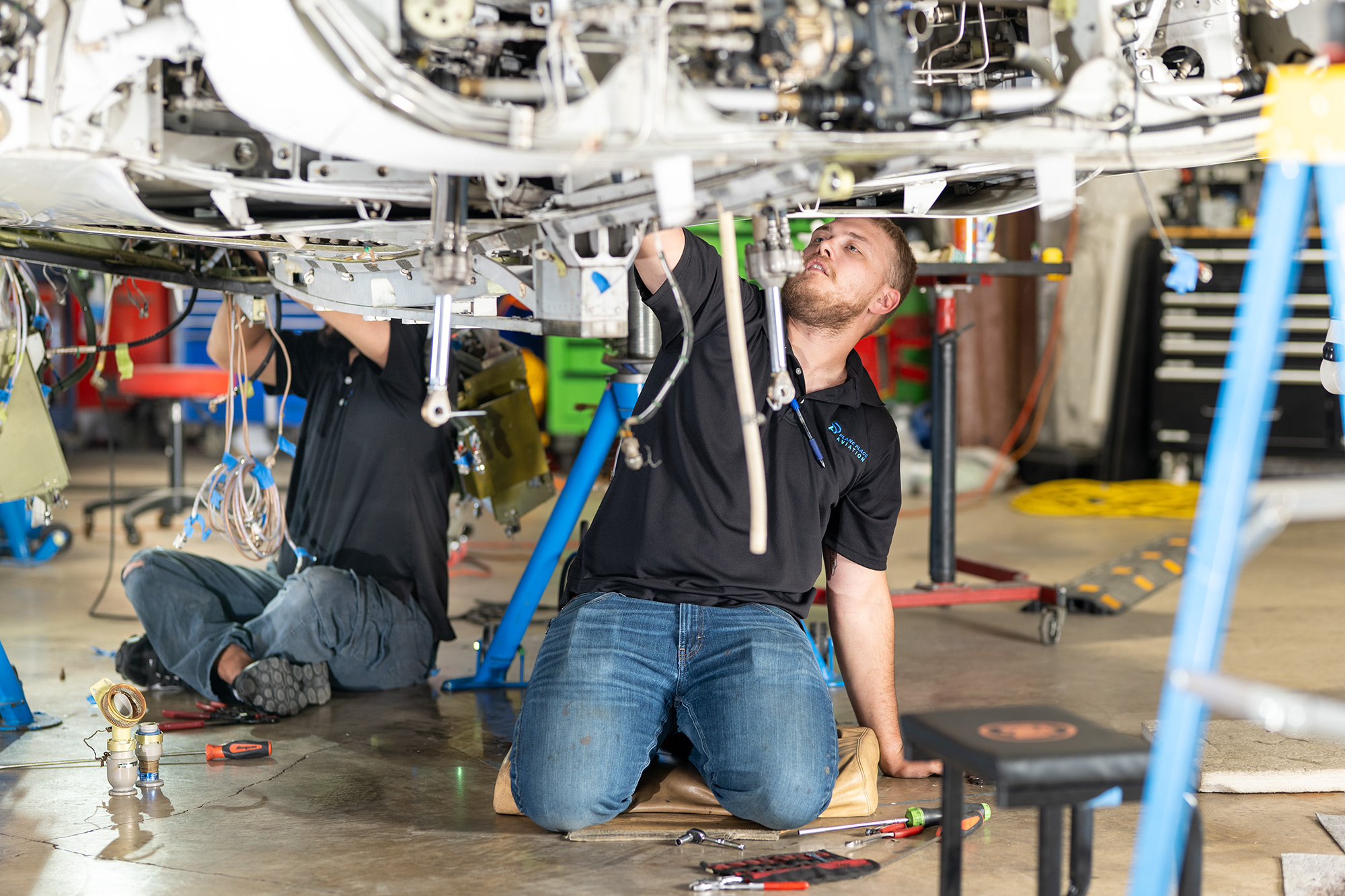
Hawker aircraft undergoing maintenance at Plane Place Aviation
Hawker Beechcraft

Hawker

800 / 800XP / 850XP / 900XP / 1000

Deep expertise across the entire Hawker 800 series — from the classic 800 through the 900XP and 1000. Our technicians know these airframes inside and out.

Models We Service

The Hawker Fleet

Every model in the Hawker family — airframe-specialist technicians, the tooling, and the parts network to support each one.

800

800XP

850XP

900XP

1000

Major Maintenance Events

Hawker 8-Year Inspections & Major Events

Every 8 years, your Hawker is due for its major inspection — a heavy maintenance event that touches every system on the aircraft. Plane Place Aviation has extensive experience performing Hawker 8-year inspections across the Hawker 800, 800XP, 900XP, and 1000 fleet. Our technicians know these airframes intimately, and our shop is set up to plan, scope, and turn these events on schedule.

We also support 4-year inspections, B/C/D/E/F/G phase inspections, landing gear overhaul, and avionics upgrades for the entire Hawker series. Our type-specific tooling and procedures are dedicated to this airframe family — not borrowed from a generic shop floor.

Hawker parts availability has become an industry-wide pain point. Plane Place Aviation has access to extensive Hawker parts inventory and a parts-out partner on the field, which means we can keep your maintenance event moving instead of waiting weeks on a back-ordered component. When Hawker maintenance is what you need, we go above and beyond to surpass expectations on your aircraft.

Inspection Cadence

Hawker Inspection Intervals at a Glance

The Hawker 800 series Maintenance Planning Document (MPD) structures scheduled maintenance around lettered phase inspections — B, C, D, E, F, and G — that step up in scope as calendar time and flight hours accumulate. Lower-letter phases handle the routine items that come due frequently: zonal inspections, lubrication, system functional checks, and the long list of small tasks that keep an 800XP or 900XP healthy between heavier events. Higher-letter phases pull deeper into structure, systems, and components that only need attention every few years.

On top of the phase cycle sit the calendar-driven 4-year and 8-year inspections. The 4-year event opens up areas the phase checks don't routinely reach — pressure bulkheads, control surface hinges, and corrosion-prone zones — and the 8-year event is the heavy one: it touches landing gear, flight controls, structure, and most of the systems on the aircraft. Operators planning a Hawker 800XP 8-year for the first time should expect a substantial scope, and the variability that comes with opening up a 20+ year-old airframe.

We build a workscope around your specific aircraft — its hours, cycles, last event history, and any open items — rather than running a generic checklist. That up-front planning is where most of the schedule risk on a Hawker heavy event lives.
Common Findings

What We See Often on Hawkers

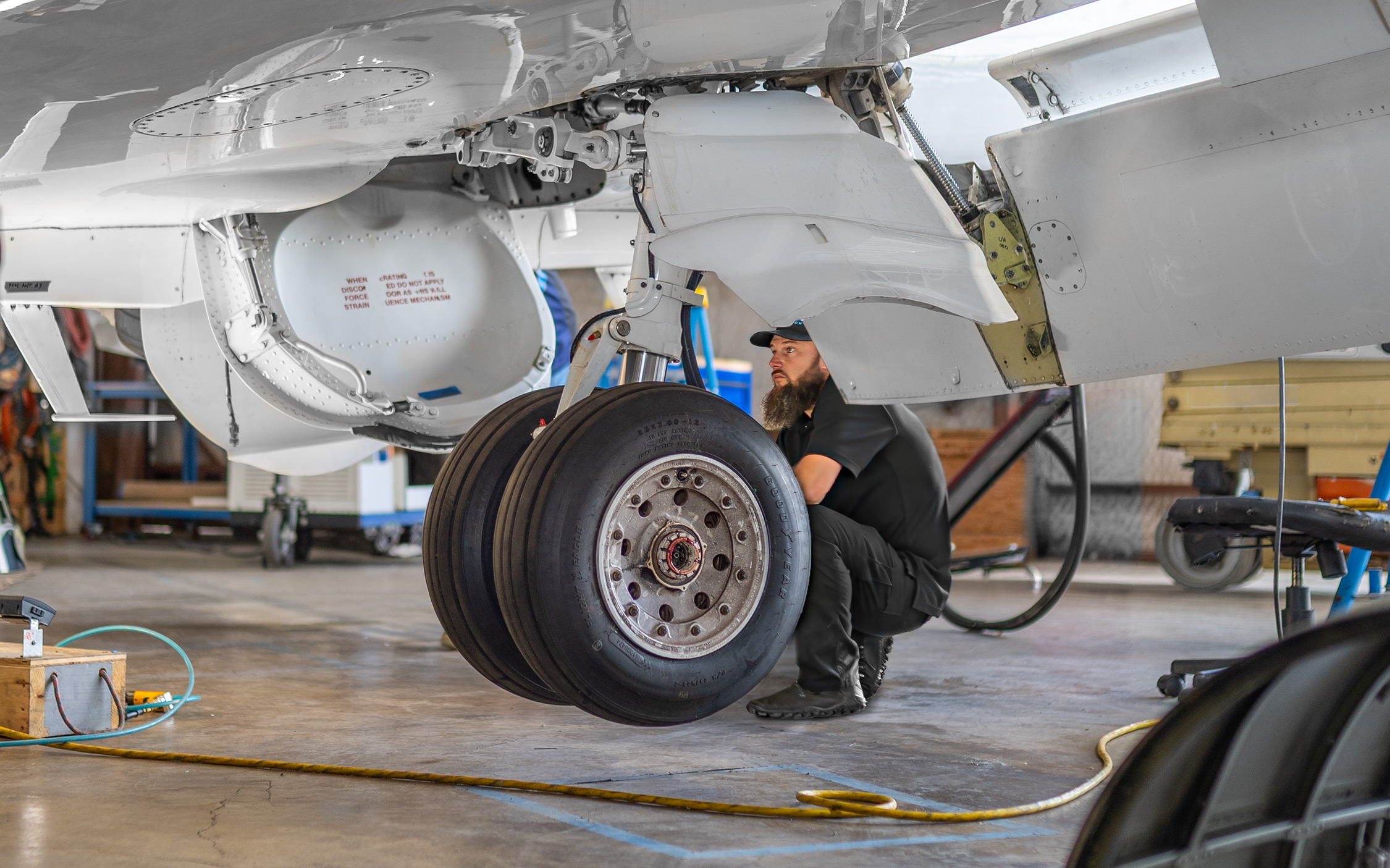
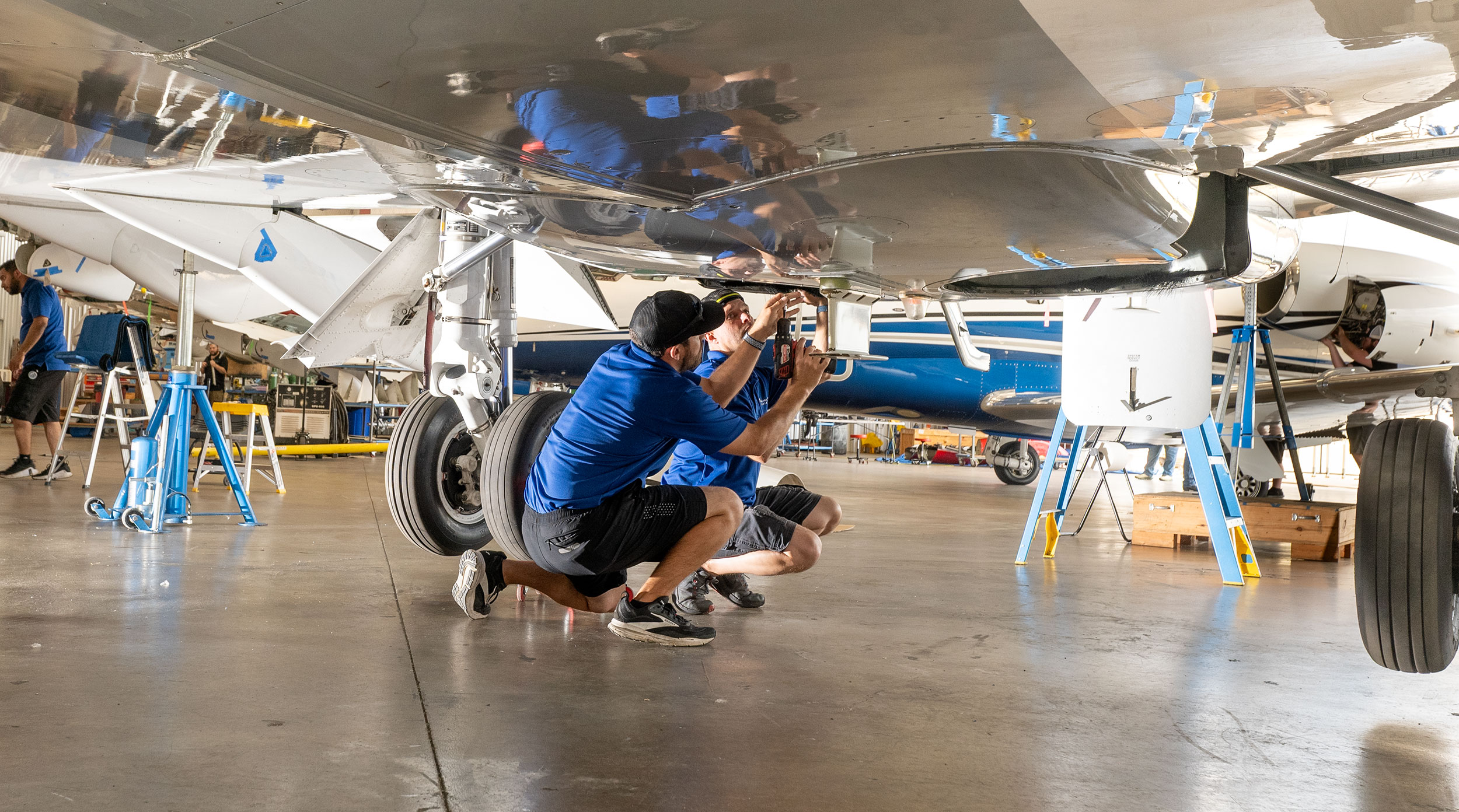
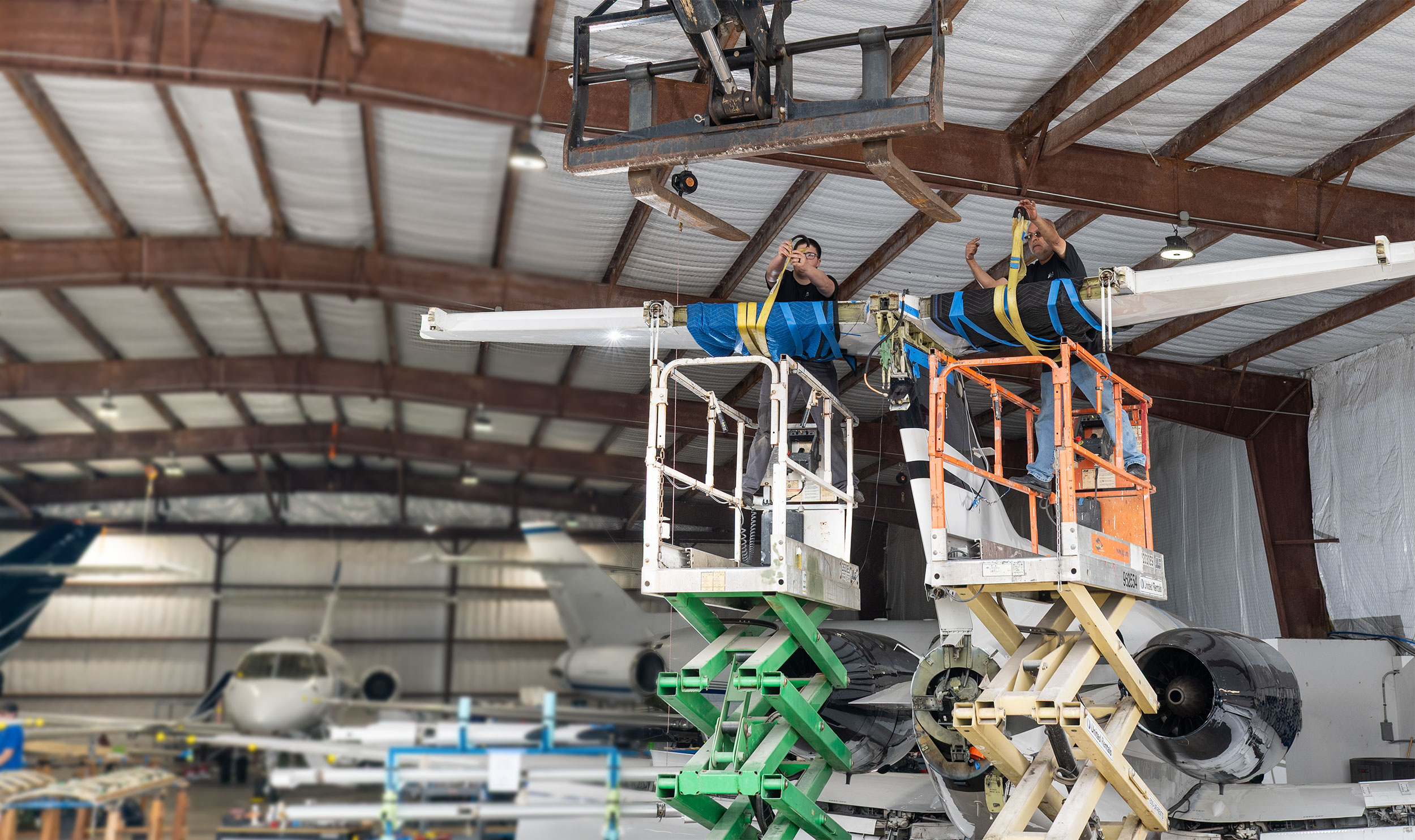
After years of working only on the Hawker 800 series, the same items keep surfacing. Landing gear is one. The Hawker main gear is robust but accumulates wear in predictable places — trunnion bushings, drag brace pins, and side brace components — and a heavy event is usually where that wear gets called out. Many operators are surprised by how much of their 4-year or 8-year invoice ends up being gear-driven work, which is why we scope it carefully up front.

Cabin pressurization is another recurring theme. Door seals, outflow valves, and pressure-bulkhead sealant all have a finite life, and a slow leak that the crew chalks up to a 'normal' Hawker quirk often turns out to be a real squawk. We pressure-test and isolate methodically rather than chasing symptoms.

Avionics squawks tend to cluster around the legacy systems that were never quite upgraded: weather radar, autopilot, and aging cockpit instruments. We handle the troubleshooting in-house and partner with avionics shops for STC upgrades when an operator is ready to modernize. Structural inspections occasionally turn up corrosion in the wing-to-fuselage area and under the floorboards — items we know to look for and document carefully so they're tracked, not buried.

Engines

Honeywell TFE731 & P&WC PW305 Notes

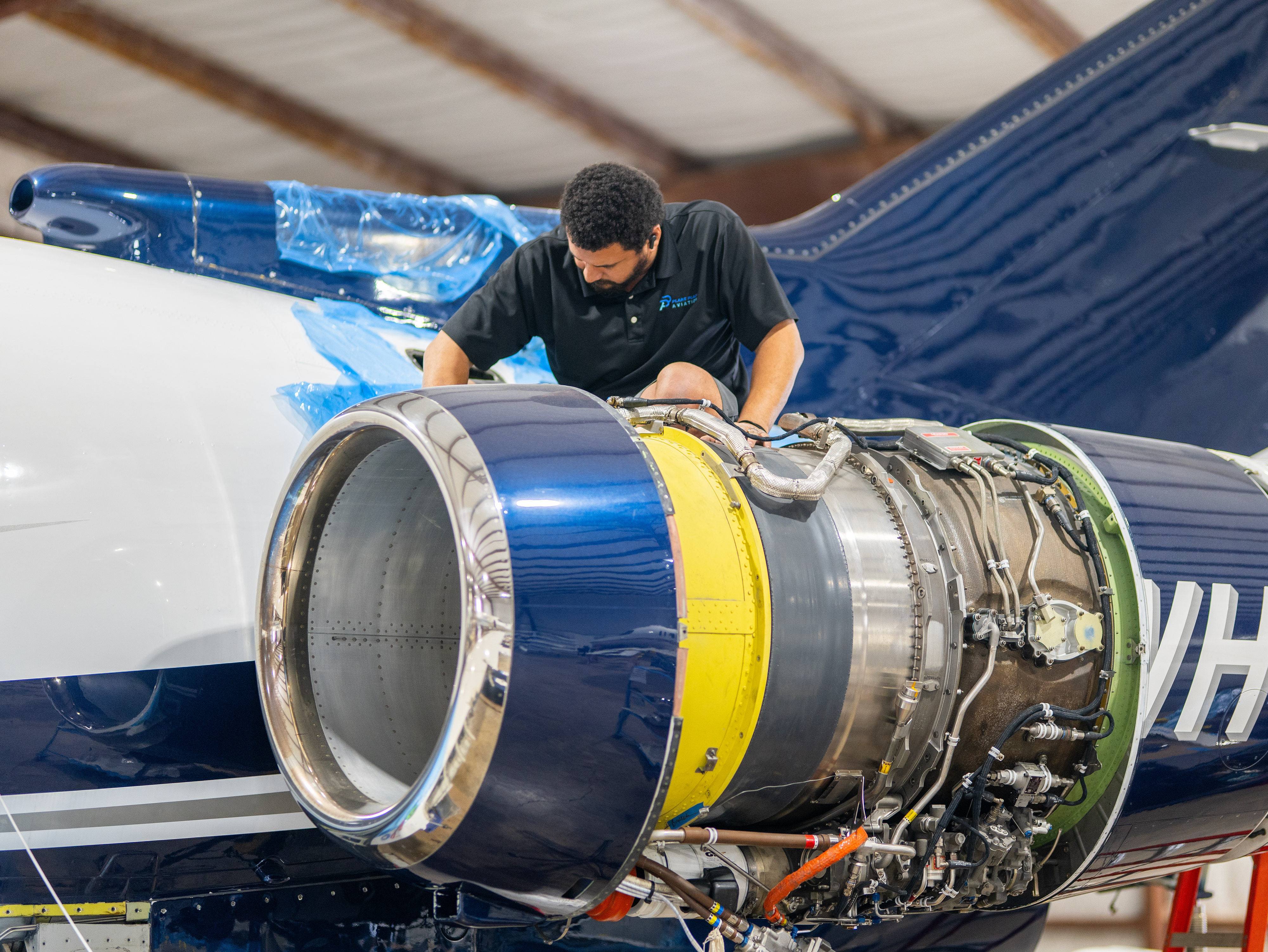
The Hawker 800 and 800XP fly behind the Honeywell TFE731-5R and -5BR; the 900XP stepped up to the TFE731-50BR with FADEC and an improved hot section. All three share the same fundamental engine architecture, and our techs are familiar with the cadence — Minor Periodic Inspection (MPI), Core Zone Inspection (CZI), and the major event — that defines TFE731 life on wing.

Hot section condition is the variable that drives the most schedule risk. A borescope finding that suggests early hot section work changes the planning conversation, and we want to have that conversation with the operator before it becomes an invoice surprise. We coordinate with Honeywell-authorized engine shops for off-wing work when it's required, and we manage the airframe-side work so the engine and airframe events line up rather than fighting each other on the calendar.

The Hawker 1000 is a different conversation — Pratt & Whitney Canada PW305 power, super-midsize range, and a smaller installed base. The maintenance fundamentals carry over, but the engine support network is its own ecosystem and we plan accordingly.

Parts Reality

How We Handle Hawker Parts

Hawker parts availability is the single most-asked-about topic on these airframes, and we'll give you the honest version: the supply chain is real-world strained. With Beechcraft no longer producing the 800 series and Textron's support posture evolving over the years, some line-replaceable units and structural components have moved from 'order it next week' to 'find it on the secondary market.' That's not a Plane Place Aviation problem — it's an industry problem — but it shapes how we plan every heavy event.

Our response is operational, not promotional. We carry meaningful Hawker parts inventory in Cleburne, and we work with a parts-out partner on the field who has airframes in teardown. When we identify a long-lead item early in a workscope, we move on it immediately — which is one reason scoping conversations with our team happen up front, not three weeks into the event.

When a part genuinely isn't available new, we'll talk through serviceable alternatives, repair options, or PMA paths and let you make the call. The goal is to keep your Hawker 800XP, 900XP, or 1000 on schedule without surprises buried inside the work order.

Why PPA

Why Operators Choose Us for Hawker Work

We picked the Hawker family deliberately. Our Hawker techs aren't context-switching to a Challenger on Tuesday and back to an 800XP on Thursday — they live on these airframes. Our tooling is type-specific. Our parts inventory is type-specific. Our documentation templates are type-specific. That focus shows up in how quickly we scope a heavy event, how cleanly we close out a workpack, and how few surprises end up in your final invoice.

Documentation is its own differentiator. Hawker maintenance records directly affect resale value, and a buyer's pre-purchase inspection team will scrutinize them. We deliver audit-ready, thorough records on every event — the kind that a Part 135 chief inspector or a future PPI team can read in order without having to call us for clarification. That care compounds: every clean workpack we produce is a small protection on the asset value of your aircraft.

Founders Tristan Noe and Travis Roberson came up on large MRO floors before starting Plane Place Aviation. They've been on the receiving end of the customer call when an aircraft is down, and the shop they built reflects what they wished those calls had sounded like. That posture — answer the phone, scope honestly, deliver records you'd want to read — is the Hawker program we run.

Hawker maintenance operations
Hawker engine work
Technician performing Hawker tail section maintenance
Plane Place Aviation technicians performing a landing gear inspection on a Hawker
Hawker
Capabilities

Our technicians have deep, hands-on experience with every model in the Hawker family. From routine phase inspections to complex structural work, we have the tooling, parts access, and type-specific knowledge to keep your Hawker flying.

B, C, D, E, F, G inspections4-year and 8-year inspectionsLanding gear overhaulStructural repairsAvionics upgradesPre-purchase inspectionsAOG response
Get a Quote